Building Bridges, Not Barriers: Tackling the Infrastructure Crisis

Recently I was having a conversation with someone embedded in the infrastructure industry in the Netherlands, and he mentioned how an iconic Van Brienenoord Bridge in Rotterdam, the 2nd largest city in the Netherlands, was requiring major maintenance. Yet, the government authorities had not received any bids due to perceived risk of the project and consequently the project hadn’t been able to move forward, with over 1 year of delay. The government apparently is now planning to reopen the tendering process, having split the project into smaller contracts, hoping this will entice companies to participate.
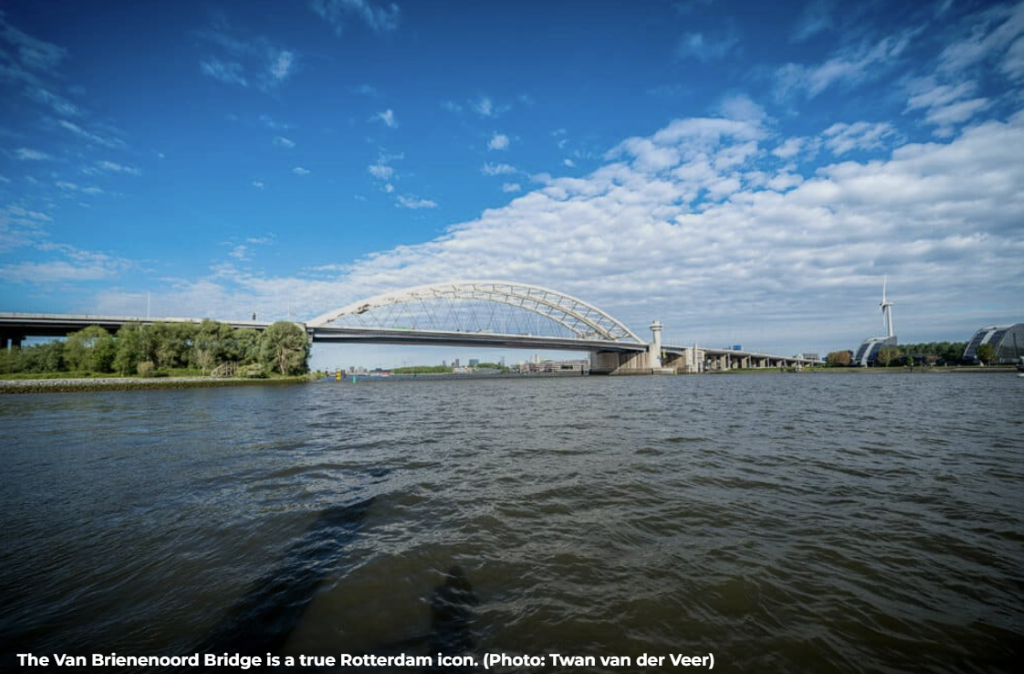
Having started my career as a project manager on large wind farm projects, I know the notion of large punitive damages looming over your head can be extremely daunting. However I had yet to encounter a situation where contractors weren’t even willing to participate, especially in such an iconic project.
Doing some research for this piece, I also learned about the Washington Bridge in Rhode Island, which has also been deadlocked, among other things by contractors unwilling to engage in the project. The bridge was suddenly closed end of 2023, and has yet to be reopened as it will require demolition and reconstruction.
These examples really made me reflect about the complexities and wider societal implications associated with large infrastructure projects and the vast city, if not region wide impacts of not being able to maintain good health of existing assets as well as building new ones efficiently.
Protecting the interest of the taxpayer money is absolutely pivotal when commissioning large infrastructure, as the possibility for cost overruns and corruption are obviously ripe. Hence having important guardrails to protect from costs ballooning, for example via damages or contractual language that pushes liability to the contractors, definitely have a use. On the flipside, having a situation where contractors all refuse to participate in a bidding process for large infrastructure should also be considered a huge failing. I remember when I relocated to the US from Europe, and the immense culture shock and deep rooted frustration when realizing public transport was inexistent and rather than taking the train to work I’d have to get there by car. My experience was introspection into the fact that society's life experiences, and hence culture, are very much shaped by our built environment, and large infrastructure like bridges play a cornerstone role in molding peoples day to day. The moral here is that getting infrastructure built and then maintaining it is a society wide priority.
We don’t have to look far to see what happens when infrastructure is not suitably maintained. In London the Hammersmith Bridge, one of London’s most iconic, has been closed to vehicle traffic for more than 5 years. In 2018 in Genoa (Italy), a 210m viaduct section of the Morandi bridge collapsed killing 43 people, an immense human tragedy.
So how can we get better infrastructure results?
We personally think the single most impactful activity is reviewing the contracting approach and reflecting on how exactly can we get as much incentive alignment between all key stakeholders. One such example is the Heathrow Airport's Terminal 5 (T5), in London, which was delivered both on time and budget.
The project utilized an innovative contracting approach, known as Integrated Project Delivery, called the T5 Agreement, which played a pivotal role in its success.
Key Features of the T5 Agreement:
- Integrated Project Team:
- Rather than the traditional contractor-client relationship, the T5 Agreement created a collaborative environment where all parties (client, contractors, and suppliers) worked as a single team.
- The client, BAA (the airport operator), took on most of the financial risk, which eliminated the fear of punitive damages for contractors.
- No Penalties for Contractors:
- Under the T5 Agreement, contractors were not subjected to penalties for delays or cost overruns. This allowed them to focus on problem-solving and quality rather than avoiding blame.
- Profit and Risk Sharing:
- Contractors were incentivized through shared profits if the project was delivered on time and budget. This "gain-share, pain-share" model encouraged collaboration and alignment of goals.
- Collaborative Planning and Management:
- A heavy focus was placed on planning, including early involvement of contractors and the use of advanced project management techniques to foresee and address potential issues.
- Risks were identified early and managed collectively.
- Strong Leadership and Governance:
- BAA acted as a leader and facilitator rather than a strict client. This fostered trust and allowed for a more transparent and cooperative approach.
Naturally one size doesn’t fit all, and hence contracting approaches must be flexible. However, we can all agree the health and speed of building infrastructure has broad macro-economic effects and hence finding ways to incentivize healthy participation and speed of completion is in the interest of policy makers and the public more broadly.
If you have any experience or knowledge around how to incentivize fast and cost-effective infrastructure building, we’d absolutely love to hear your thoughts.
Cheers,
Site Steer team
If you work in construction, climate tech and would like to reach out to us to share about some interesting project, innovation or startup please reach out to at sitesteer.ai@gmail.com!